
Technique
Silk ribbon embroidery is fun to do and fast to complete. There are examples of silk ribbon being used to embellish clothing in French courts from as early as the mid 18th century. Here in the UK and the British colonies, silk ribbon embroidery boomed with the Victorian’s love of decoration. Today silk ribbons are easily available in a range of widths and colours.
This blog discusses the essential equipment you’ll need to explore working with silk ribbons.

Technique
Silk ribbon embroidery is fun to do and fast to complete. There are examples of silk ribbon being used to embellish clothing in French courts from as early as the mid 18th century. Here in the UK and the British colonies, silk ribbon embroidery boomed with the Victorian’s love of decoration. Today silk ribbons are easily available in a range of widths and colours.
This blog discusses the essential equipment you’ll need to explore working with silk ribbons.
Silk Ribbons
Silk ribbons have a beautiful sheen and are available in a variety of widths. Silk ribbon is so soft and fine that it can be threaded through the eye of a needle and stitched as you would with traditional embroidery threads. Silk ribbon is pliable, has a soft grain and scrunches easily. The most common width for silk ribbons are 2mm, 4mm, and 7mm. Silk ribbon can be bought in a huge range of colours from rich jewel tones to subtle soft shades, variegated and natural. Natural silk ribbon can be hand dyed in various ways.
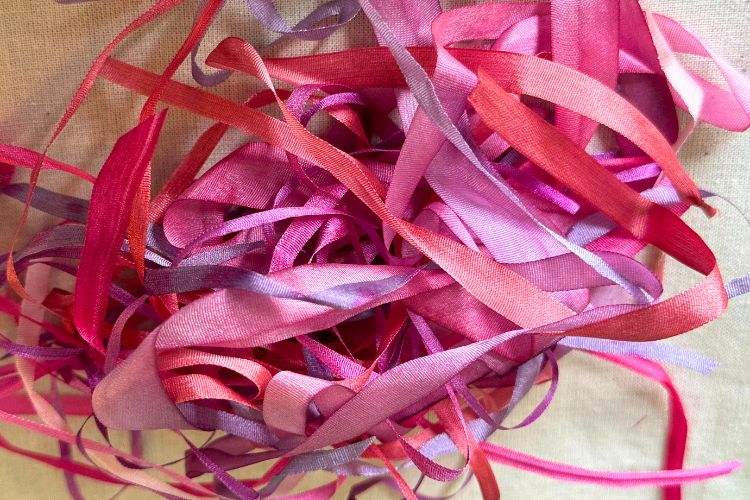
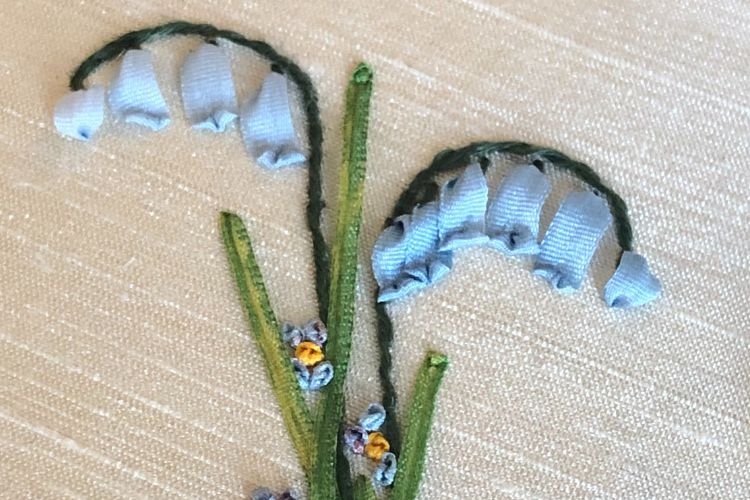
Depending on the stitch you are using and the way you pull your needle though the fabric when creating your stitch can lend to the silk ribbon lying flat against the background fabric. However at the same time silk ribbon has enough body to make your embroidery very three-dimensional. Using simple techniques it is very easy to manipulate the silk ribbon.
Fabrics
There are oodles of fabric choices so long as the fabric is firm enough to support the stitching, but with a weave loose enough for the ribbon you are using to pass through without becoming damaged. Personally I like to use silk. There is something quite luxurious about silk on silk. Silk dupion has a wonderful texture that gives another layer of interest to your embroidery. The back of silk ribbon embroidery is not neat and many silks are not firm enough to support silk ribbon stitches. For these reasons I like to use a light weight calico as a backing fabric to most of my projects.

Needles
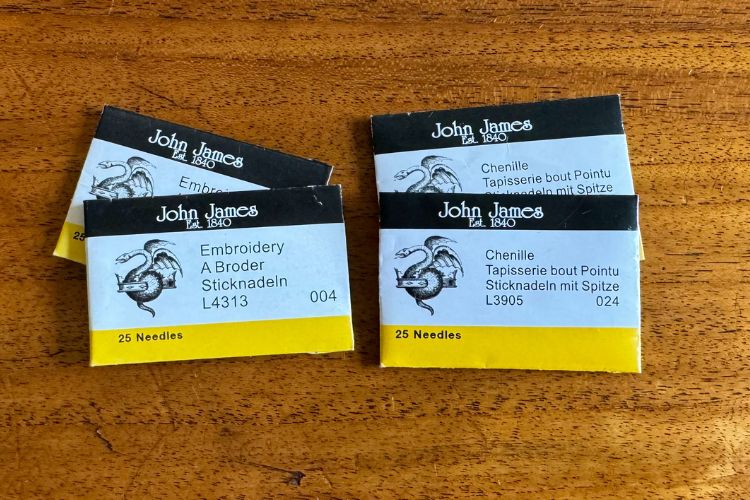
I have 3 types of needles handy for most projects when working with silk ribbons. Chenille needles for the ribbons. Crewel needles for fine thread work and beading needles if I add beads. Beads are often used in silk ribbon embroidery. Small seed beads make excellent buds, centres for larger flowers and additions to decorative stitching. The size of crewel and beading needles will depend on the threads and beads I’m using.
When choosing the right size chenille needle it’s firstly about the size of the eye. The needle eye should be just large enough for the ribbon to pass through without puckering. The shaft of the needle needs to be large enough that a sufficient hole is made in the background fabric to accommodate the ribbon as it passes through. Depending on the ribbons width and background fabric I usually use chenille needles sizes 22 to 26.
Hoops & Sharp Scissors
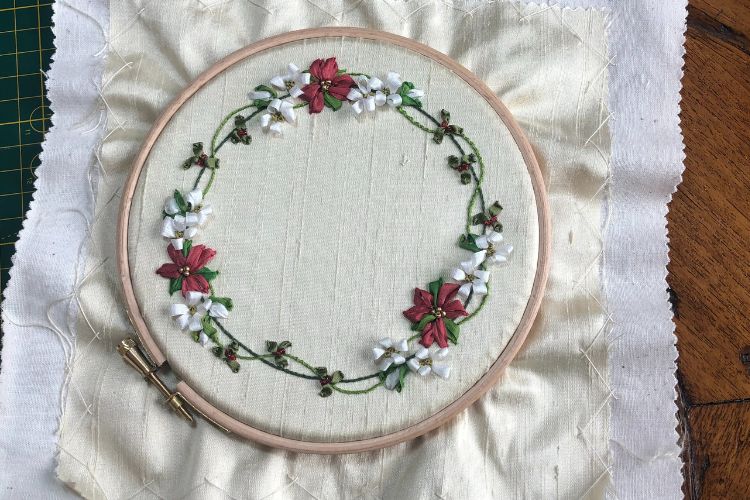
Yes, yes, YES. The best results are achieved when the background fabric is held under tension. If posible use a hoop that is large enough to completely surround your project so that finished stitches are not damaged. I like to wrap my hoops with bias tape. Wrapping ensures a tighter hoop fit and also protects your background fabric. Sharp scissors are essential for cutting your ribbon at specific angles.
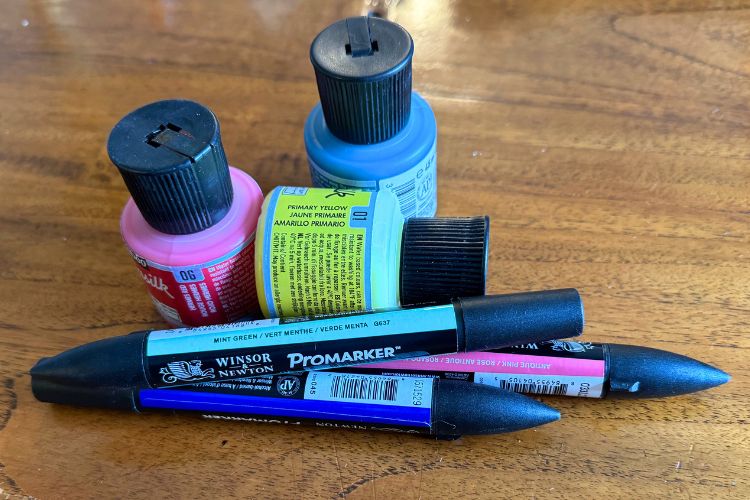
Paint & Fabric Markers
In reality this group of ladies were all exploring crewelwork for the first time. Everyone worked on one of two designs and chose one of four colour ways of wool. Everyone was introduced what I like to call, the ‘five essential’ stitches for crewel. With the addition of long and short soft shading. Although we were all learning the same stitches, different designs and colour ways meant that each embroidery was unique. Future crewelwork embroidery workshops at Scampston will be mixed ability.
Other Handy Tools
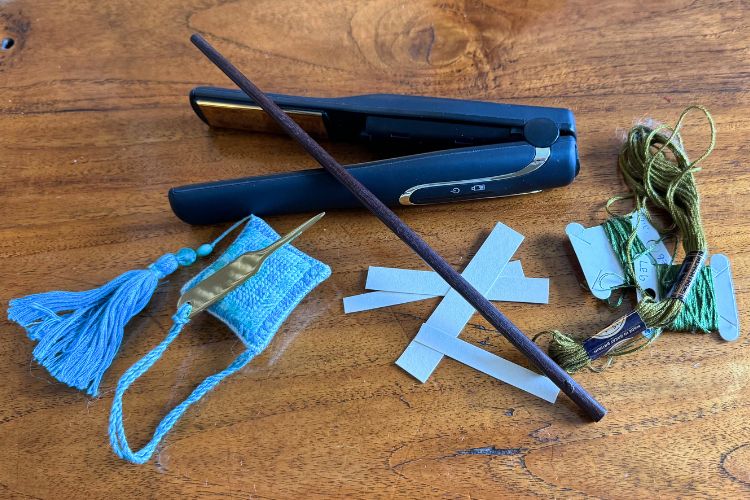
There are a number of additional handy tools specific to the techniques of silk ribbon embroidery. A mellor is very useful when manipulating the silk to form leaves and petals. A chopstick and scraps of card can be used in a similar way depending on the exact shape you are creating. I also use a mini hair straightener for ironing out crinkles in the ribbons before putting them into a needle.
Workshop Dates
Jacqueline runs mixed ability small group embroidery workshops, in various venues, at scheduled times throughout the year.