
Workshops
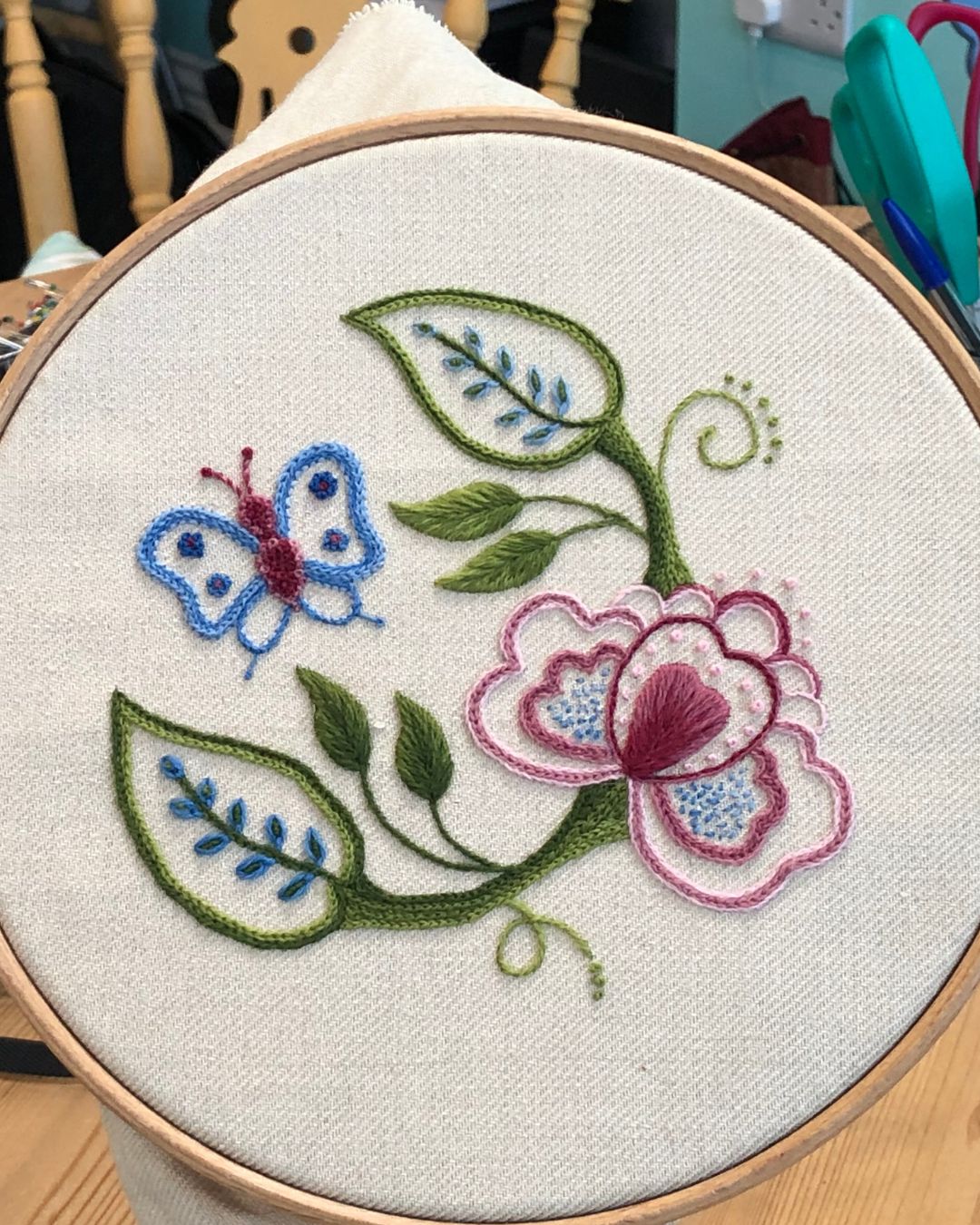
Heart Bloom & Butterfly is actually the 3rd in a series of beginner designs which I use for teaching workshops about Jacobean Crewelwork embroidery. This is my own design, inspired mostly by leaf, flower and butterfly shapes found on old Jacobean patterns and embroideries inherited from my Grandmother. I love the movement in the flick tip of the leaves, very typical of Jacobean foliage.
Workshops
Heart Bloom & Butterfly is actually the 3rd in a series of beginner designs I use for teaching Jacobean Crewelwork embroidery. This is my own design, inspired mostly by leaf, flower and butterfly shapes found on old Jacobean patterns and embroideries inherited from my Grandmother. I love the movement in the flick tip of the leaves, very typical of Jacobean foliage.
Designing for Beginners
Traditional Jacobean embroideries are usually packed with foliage, flowers and insects. Also larger animals and fruit, although I have not included animals and fruit in my beginner designs. The wonderful thing about Jacobean crewelwork is that there’s so much flexibility. Traditionally the embroiderer would have a design and then interpret that design in however which way they choose. I try to encourage this traditional approach to crewel embroidery in my workshops. I do provide kits but they are far from prescriptive. I teach a variety of stitches, such as outline stitches, filling stitches and accent stitches, then demonstrate different ways that they can be used.
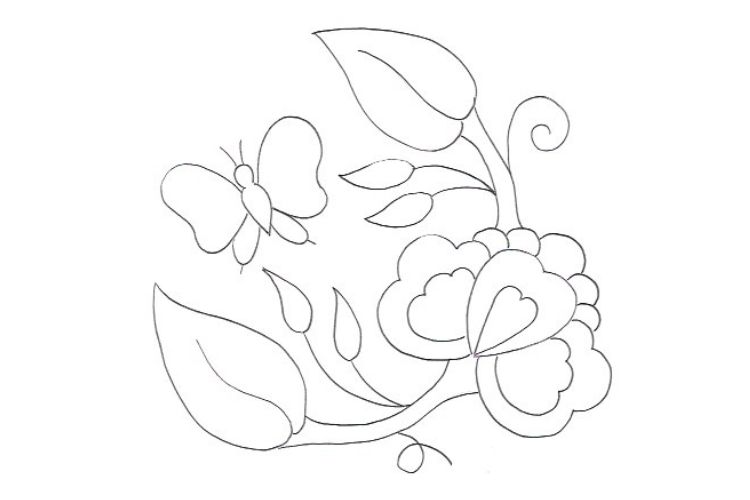
My designs do not fit purely into the traditional. This is not a choice, just the way that a design evolves in todays world and the consciousness as a teacher that I want my students to have an opportunity to explore specific stitches. In a beginner workshop situation as well as a design needing to be pleasing aesthetically it also needs to inspire place for what I like to call the 5 essential stitches for crewelwork.
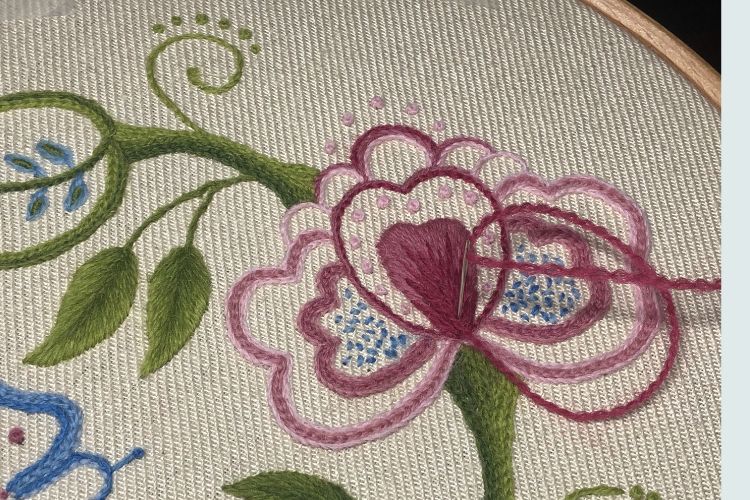
When I’m designing for the beginner I use a 3 elements, 3 colour way approach. In this design the 3 elements are 2 motifs, the flower and the butterfly, and then the foliage. With the Heart Bloom and Butterfly the 3 elements are the flower, the butterfly and the foliage. The student also has a choice of 4 different colour ways. Each colour way is designed around the seasons, Spring, Summer, Autumn and Winter inspired colours. Each design calls for 3 colours and each colour has 3 shades, so there are 9 wools in total.
For more information about other crewelwork designs …
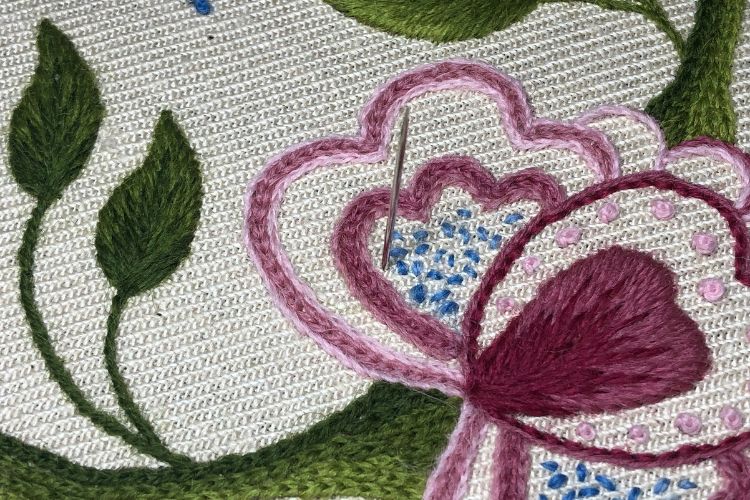
Each design element had a dominant colour and an accent colour. In the case of this demo Bloom and Butterfly embroidery, the bloom design elements dominant colour is pink and the accent blue. The butterfly’s dominant colour is blue and the accent pink, while the foliage is green with an accent of blue. In traditional Jacobean embroidery colours do not have to be true to life, can be randomly positioned and elements do not have to be in proportion or have any perspective. As I said earlier this style of embroidery is truly flexible.
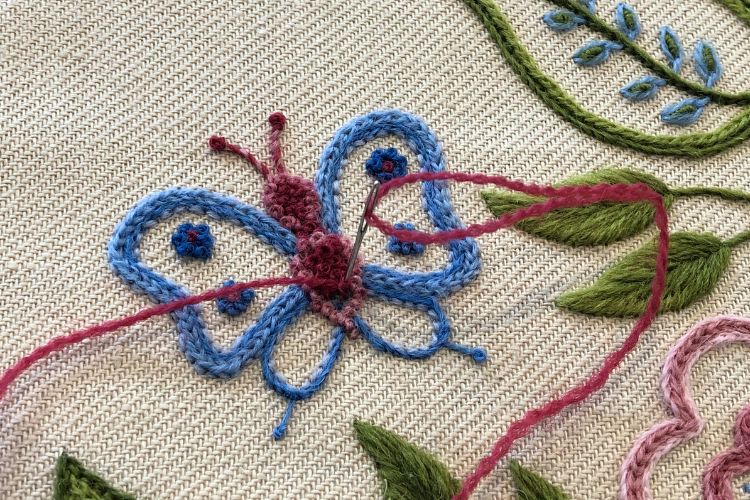
Traditionally the variety of stitches used was far less than contemporary crewelwork. Nowadays we are totally at liberty to bring in a huge variety of traditional, contemporary and international stitches to add interesting layers of texture to our designs. As my students move from the beginner to the intermediate and more advanced embroiderer I introduce them to and encourage them to explore a wider variety of stitches.
And what do we do with these embroideries once completed? As well as design and stitch selection, crewelwork is hugely versatile in it’s use. From scatter cushions to fire screens, waistcoat panels to bedspreads, bags to glasses cases, foot stools to curtain panels …

For step-by-step instructions on how to make these cute, useful embroidery resource bags …
Workshop Dates
Jacqueline runs mixed ability small group embroidery workshops, in various venues, at scheduled times throughout the year.